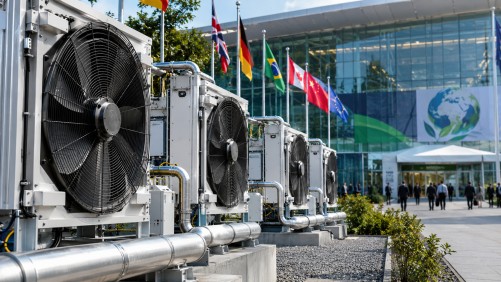
As the COP31 climate summit unfolds in Antalya, Turkey, discussions about carbon dioxide removal (CDR) technology are taking center stage. Advocates are pushing for the inclusion of CDR in the summit’s final agreement, arguing that this technology could play a crucial role in mitigating global warming by removing carbon dioxide directly from the atmosphere and storing it underground, in oceans, or other materials.
Supporters of CDR emphasize its potential to reduce global temperatures, particularly if the world surpasses the 1.5°C warming threshold set by international accords. They are calling for increased investment and the establishment of an international framework to guide and coordinate carbon removal efforts.
Despite its promise, CDR technology is still in its infancy. Currently, approximately 2 billion tonnes of carbon dioxide are removed annually, predominantly through reforestation efforts, with direct air-capture technologies contributing only a small portion. Experts highlight significant challenges, including the high costs, limited investment, and scalability issues, that need to be addressed to advance these technologies.
Environmental groups caution against an overreliance on future carbon removal, warning that it could weaken immediate efforts to cut emissions. They also point out potential risks to land use and marine ecosystems associated with large-scale CDR, which could inadvertently support continued fossil fuel consumption.
It’s important to note that carbon dioxide removal is distinct from carbon capture and storage (CCS), which prevents emissions from entering the atmosphere by capturing them directly from industrial sources. Nonetheless, both strategies are under consideration in a draft text at the climate summit, highlighting the ongoing debate over the best path forward in combating climate change.