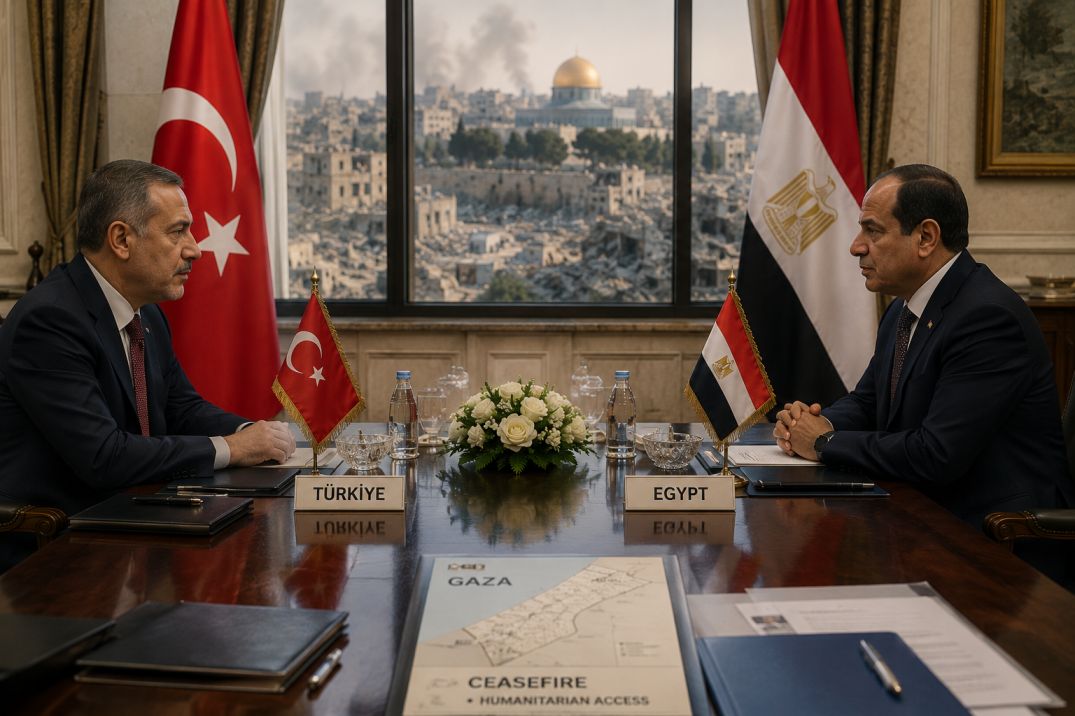
High-level discussions took place in Ankara on Monday as Ibrahim Kalın, the head of Türkiye’s National Intelligence Organization, met with Hassan Rashad, the chief of Egypt’s General Intelligence Service. The dialogue centered on key regional security matters, the ceasefire in Gaza, and increasing bilateral cooperation. This meeting highlights the strengthening diplomatic and security relationship between Türkiye and Egypt, as both nations seek to enhance their influence across the Middle East and Africa.
A significant portion of the meeting was dedicated to the ongoing implementation of the Gaza ceasefire agreement. Turkish security sources indicated that Kalın and Rashad committed to boosting coordination to manage what they view as escalating breaches of the ceasefire by Israel. Kalın reiterated Türkiye’s steadfast support for Palestinians, emphasizing Ankara’s determination to continue providing assistance amid the conflict.
Beyond the immediate concerns in Gaza, the intelligence chiefs turned their attention to broader regional dynamics. They explored strategies to deepen cooperation between their countries, particularly in supporting political reconciliation efforts in Libya. This includes advocating for the unification of governmental and military bodies in Libya’s eastern and western regions under a single national framework.
The discussions also covered security issues in other regional hotspots. Kalın and Rashad shared insights on the developments in Somalia and the conflict in Sudan, involving the Sudanese Armed Forces and the Rapid Support Forces. They assessed the broader implications of these situations for regional stability and considered potential avenues for ongoing dialogue on mutual security interests.
This meeting underscores the burgeoning partnership between Türkiye and Egypt following the reestablishment of diplomatic ties. As both governments aim to take on more significant roles in resolving regional conflicts, intelligence collaboration is expected to be a key component of their efforts to promote stability, particularly in Gaza and other areas facing persistent security challenges.