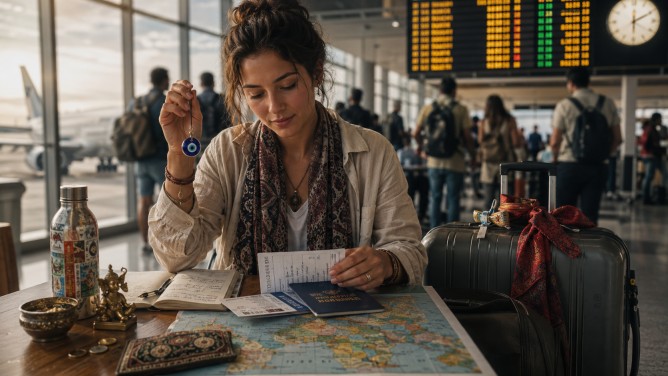
Traveling often brings a mix of excitement and tradition, with many cultures around the world embracing unique rituals to ensure a safe and fortunate journey. These customs, passed down through generations, offer a fascinating glimpse into the beliefs that accompany travel plans. From Europe to the Middle East, travelers engage in practices that they hope will protect them from misfortune and bring good luck on their travels.
In the Balkans, the humble clove of garlic is more than just a kitchen staple. It’s believed to ward off negative energy and protect against the evil eye. Some travelers tuck a clove into their luggage, trusting it to safeguard them from bad luck. Meanwhile, the act of physically interacting with an aircraft before boarding, such as touching or tapping its exterior, is a common ritual among flyers. This gesture is thought to bring good luck and offer a sense of reassurance to those who may be nervous about flying.
Similarly, stepping onto a plane with the right foot first is considered an auspicious start to a journey for some. The expression “starting on the right foot” takes on a literal meaning here, as travelers hope this small action will invite good fortune. In parts of the Middle East and the Balkans, the tradition of throwing water behind a departing traveler symbolizes a wish for a smooth journey and a safe return, with the flowing water representing the ease of travel.
Numerical superstitions also play a role in travel customs. Numbers like 13 in the West and 4 in China are often avoided due to their negative connotations. In Italy, the number 17 carries a similar stigma. These beliefs can influence everything from hotel room and floor numbers to the timing of travel activities. Additionally, in Slavic cultures, there’s a custom of sitting on one’s luggage briefly before setting off. This pause is a time for reflection and mental preparation, ensuring a calm and ready mind before embarking.
Finally, in several cultures, it’s considered bad luck to sweep the floor immediately after a traveler departs. The act is thought to sweep away the traveler’s good fortune and disrupt their safe return. While these travel superstitions may not stand up to scientific scrutiny, they continue to be cherished as part of cultural heritage. For many, these rituals are not about proving their efficacy but rather about connecting with family traditions, embracing cultural identity, and enhancing the joy and anticipation of travel.