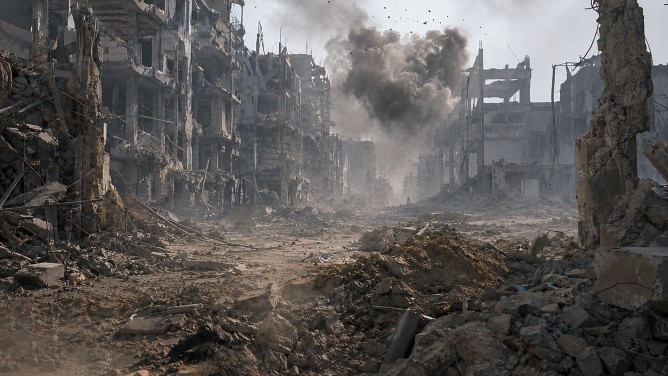
The ongoing Israeli military activities and occupation in southern Lebanon are exacerbating tensions between Hezbollah and the Lebanese government, creating a challenging environment for communities that depend on security and support from both entities. Hezbollah has long established a comprehensive network of social services, offering housing, healthcare, education, and financial aid to families impacted by conflict. These resources have become crucial for residents displaced by the recent hostilities, given the Lebanese government’s financial constraints that limit its ability to provide similar support.
In response, the Lebanese government is striving to assert its authority and regain public trust, especially in regions previously under Hezbollah’s influence. The Lebanese army has taken on the responsibility of managing reconstruction and infrastructure projects in areas reclaimed from Israeli control, with the aim of enhancing the visibility of government institutions within local communities.
Nevertheless, the state faces numerous obstacles in this endeavor. Ongoing Israeli attacks and military presence in southern Lebanon have undermined confidence in the government’s capacity to safeguard its citizens. Some residents express frustration over the government’s perceived inefficacy, while others blame Hezbollah for its role in perpetuating the cycle of conflict.
Lebanese authorities acknowledge that rebuilding trust among Hezbollah’s supporters requires more than just security initiatives. They emphasize the need for improved public services, greater political inclusion, and enhanced economic opportunities as prerequisites for communities to fully embrace state institutions. This situation also complicates efforts to disarm Hezbollah, as authorities are under pressure to assert state control over armaments while avoiding any semblance of collusion with Israel against southern Lebanese communities.
Officials caution that substantial restoration of state authority will remain elusive as long as Israeli military actions and occupation persist in southern Lebanon. Until these activities cease, many residents continue to view Hezbollah as a more dependable source of protection and assistance compared to the financially beleaguered Lebanese state.