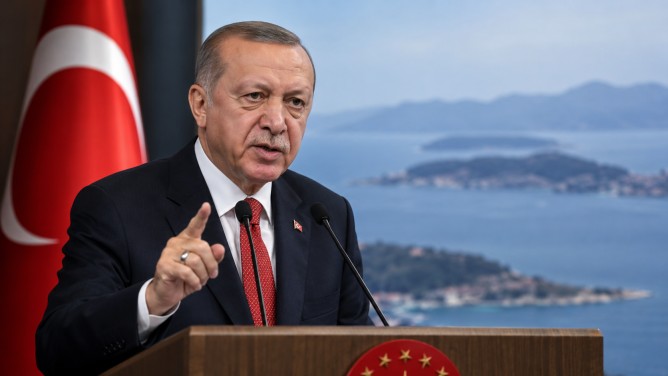
Turkish President Recep Tayyip Erdoğan has issued a stern warning to Greece concerning its growing military presence on the Aegean islands. He emphasized that Türkiye will not stand idly by if it perceives these actions as breaches of international agreements. Erdoğan’s remarks came after his participation in a Shanghai Cooperation Organization summit, where he highlighted Türkiye’s desire to maintain amicable relations with Greece. However, he urged the Greek government to reconsider its strategy of deploying military forces on islands that Türkiye regards as demilitarized according to international treaties.
Greece, on the other hand, argues that its military buildup is essential to address security concerns, asserting its right to protect its own territory. The two nations have a history of disputes, including disagreements over maritime boundaries and proposed marine parks in the Aegean Sea. Erdoğan clarified that Türkiye has no aspirations to seize territory from any country but will steadfastly uphold what it considers its rightful claims. He cautioned that disregarding international agreements could lead to heightened tensions and advised Greece to reflect on lessons from past conflicts.
Erdoğan also expressed Türkiye’s intent to strengthen its involvement with the Shanghai Cooperation Organization while preserving robust relations with Western nations. During his visit, he held talks with Russian President Vladimir Putin, focusing on the ongoing Russia-Ukraine conflict and security issues in the Black Sea. Erdoğan emphasized the need for sustained efforts to ensure the safety of commercial shipping, amid increasing risks faced by Turkish vessels in the region.
In addition to these discussions, Erdoğan addressed Türkiye’s defense collaborations with Saudi Arabia and Pakistan. He outlined efforts to resolve the conflict with the PKK and reiterated Ankara’s aspiration to rejoin the US F-35 fighter jet program. Despite ongoing negotiations with Washington, Erdoğan affirmed Türkiye’s commitment to advancing its indigenous KAAN fighter aircraft development.