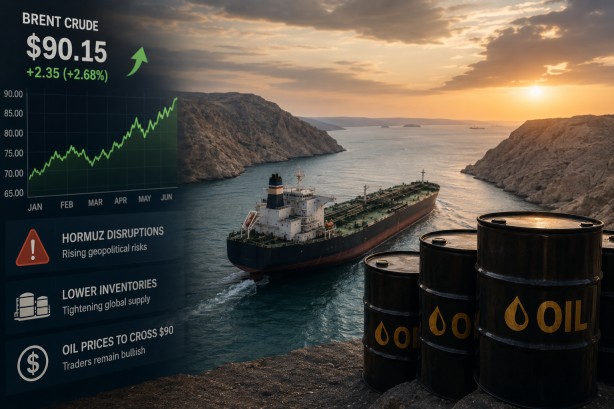
Oil prices have surged to their highest weekly gain since April, spurred by recent geopolitical tensions. Brent crude, hovering around $85 on Friday, rose approximately 11% over the week. Meanwhile, the U.S. benchmark, West Texas Intermediate, edged closer to the $80 mark. These increases come amid renewed strains between the United States and Iran, which have disrupted vital supply routes in the Middle East and slowed tanker traffic through the crucial Strait of Hormuz.
The Strait of Hormuz, a strategic chokepoint through which nearly 20% of the world’s oil supply transits, remains a focal point of concern for global energy markets. The slowdown in tanker movements has prompted shipping companies to closely monitor the evolving security landscape. Despite these developments, Brent crude has found it challenging to surpass this week’s peak of $87.55 per barrel. Market analysts suggest that traders are banking on diplomatic resolutions to avert a prolonged crisis.
In the fuel markets, the impact of these tensions is becoming increasingly evident. Refining margins in the United States have risen due to tightening supplies of diesel and gasoline. Similarly, European fuel markets are experiencing mounting pressure. The situation is exacerbated by additional disruptions to Russian exports, which have further fueled worries about global oil supply stability.
Experts contend that oil prices may struggle to breach the $90 threshold unless there is a marked decline in inventories or if tensions between Washington and Tehran escalate significantly, potentially leading to a more extended disruption of shipping through the Strait of Hormuz. For now, market participants are closely watching diplomatic initiatives and supply data, which are expected to dictate the next significant movements in global oil prices.