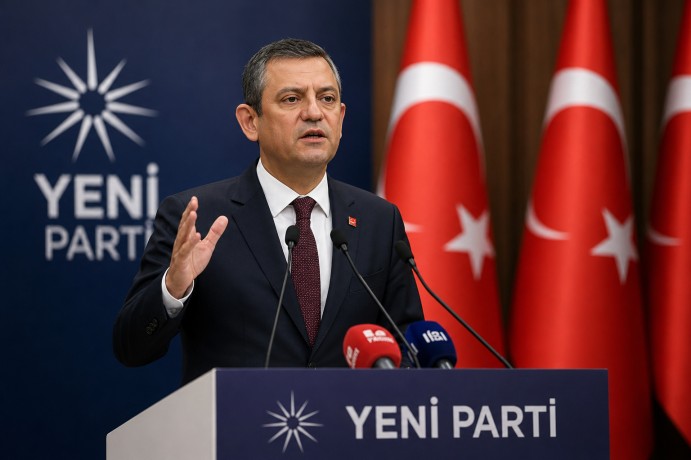
In a momentous shift within Türkiye’s political landscape, 91 lawmakers have departed from the Republican People’s Party (CHP) under the leadership of Özgür Özel, the former head of the party, to form a new political entity named the New Party (Yeni Parti). This mass exodus represents the largest division within the CHP in recent times and alters the power dynamics in the Turkish Parliament. With these 91 lawmakers now part of the New Party, it has emerged as the largest opposition faction, while the CHP’s representation has dwindled from 135 seats to 44, costing it its status as the main opposition party in the country.
The official formation of the New Party was marked by Özel signing the foundational documents, which were submitted to the Interior Ministry for registration. The defected lawmakers have also joined the party’s founding board. Speaking in Ankara, Özel announced that the party had finalized its legal registration and was set to establish its leadership framework. He revealed that the founding board would meet at the historic Anadolu Club, a venue established under the guidance of Mustafa Kemal Atatürk, to elect the party’s chairperson and governing bodies.
Özel expressed confidence that the New Party, participating in upcoming parliamentary budget discussions as the main opposition for the first and last time, would eventually lead a government focused on economic growth and political stability. This parliamentary shift is anticipated to reorganize the seating in the General Assembly and increase the number of parliamentary groups from six to seven. The split is a culmination of prolonged internal strife within the CHP, following Kemal Kılıçdaroğlu’s return to party leadership after a court ruling nullified the prior party congress.
In response to the formation of the New Party, CHP spokesperson Müslim Sarı questioned the rationale behind creating a new political entity when Özel had committed to following the same political principles as the CHP. Sarı challenged the necessity of a new party if the political path remained unchanged, suggesting that the move seemed more about strategic positioning than policy divergence. As the New Party takes shape, it is poised to redefine opposition politics in Türkiye as the nation approaches future legislative discussions and elections.