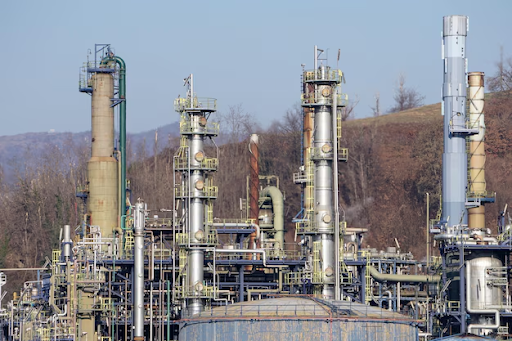
While stock markets fell broadly on Monday in response to the escalating Middle East conflict, shares in major oil companies moved in the opposite direction, rising sharply as investors calculated that the surge in crude prices would significantly boost their earnings. BP and Shell, the two largest oil companies listed in London, each gained approximately 3% — making them among the relative outperformers in an otherwise deeply negative session.
The logic driving the gains is straightforward. Oil companies earn more money when the price of crude rises, provided their production costs remain stable. With Brent crude climbing as much as 13% to hit a 14-month high of $82 a barrel, the earnings uplift for major producers is substantial. Even after prices retreated somewhat to around $77, Brent remained about 6% higher than its Friday close — a meaningful improvement in the revenue outlook for the sector.
The gains in BP and Shell also reflected investor expectations about the medium-term oil price environment. With the Strait of Hormuz facing effective closure and Qatar’s LNG production halted, the supply disruption looks likely to be sustained rather than temporary. Energy analysts warned that oil could exceed $100 a barrel if the situation is not resolved quickly. For oil company shareholders, an extended period of high prices is generally welcome news, even if the geopolitical circumstances driving those prices are deeply concerning.
The divergence between oil company performance and the broader market was stark. While the FTSE 100 fell 1.2% overall, the gains in BP and Shell helped to cushion the index’s decline. Airlines, by contrast, suffered significant losses as fuel costs rose and flights were cancelled. The contrast illustrated the asymmetric nature of oil price shocks — deeply harmful to energy consumers and transport industries, but potentially beneficial to energy producers.
For BP and Shell, the gains represent a reversal of the pressure the companies faced during periods of lower oil prices. Both companies have been navigating the complex challenge of transitioning toward lower-carbon energy while maintaining profitability in their core fossil fuel businesses. In the short term, the conflict-driven surge in oil prices removes some of that financial pressure, providing additional cash flow that could be directed toward dividends, buybacks, or investment.
52